ISO 42001 PREMIUM
IMPLEMENTATION AND CONTINIOUS GOVERNANCE
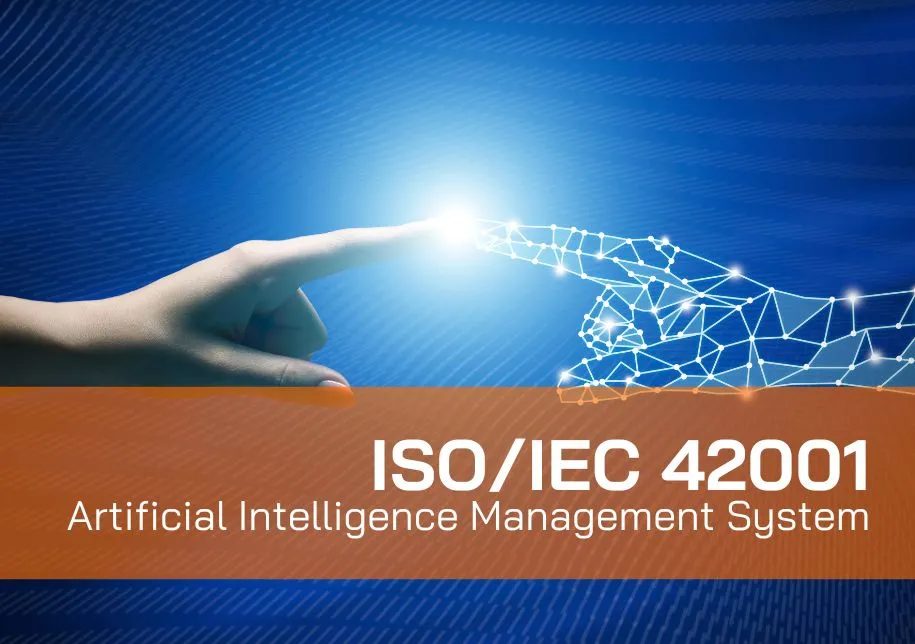
The International Organization for Standardization (ISO) 42001 standard provides requirements for establishing, implementing, maintaining, and continually improving an Artificial Intelligence Management System (AIMS). Internal and external parties can use this international standard to assess an organisation’s ability to govern, develop, deploy, and manage AI systems responsibly while addressing risks, ethical considerations, and regulatory obligations.
OUR PURPOSE ISO 42001 Premium CERTIFICATION FOR SMB
ISO/IEC 42001 is the world’s first internationally recognised standard for Artificial Intelligence Management Systems (AIMS). Achieving ISO 42001 certification demonstrates an organisation’s commitment to the responsible governance of AI, effective AI risk management, transparency, accountability, human oversight, and compliance with applicable legal, regulatory, and ethical requirements. This package is tailored for organisations that have already implemented the Cyber Premium or Cyber Elite package and wish to establish or mature their Artificial Intelligence Management System, enabling the secure, ethical, and compliant adoption of AI technologies across the organisation.
ISO/IEC 42001 is an internationally recognised standard for establishing, implementing, maintaining, and continually improving an Artificial Intelligence Management System (AIMS). It provides a framework for organisations to govern AI responsibly, manage AI-related risks, and ensure the ethical, transparent, and compliant use of artificial intelligence technologies.
AAchieving ISO/IEC 42001 certification demonstrates an organisation’s commitment to responsible AI adoption, effective AI governance, risk management, and compliance with emerging AI regulations and industry best practices. This service is tailored for organisations that have already implemented the Cyber Premium service and wish to strengthen their AI governance framework and enable the safe, ethical, and compliant use of artificial intelligence technologies.
Comprehensive AI governance, risk assessment, and risk mitigation.
Improved transparency, accountability, and human oversight of AI systems.
Enhanced trust and confidence among customers, regulators, and stakeholders.
Alignment with international standards for responsible AI and emerging regulatory requirements.
ISO 42001 Premium Phases
Initial establishment and implementation of ISMS services and perform internal audit to achieve certification. This phase ensures that we have implemented the necessary security controls and practices from ISO 27001 Annex A, preparing for your ISO 27001 external audit.
Your Cybersecurity journey
Phase 1
ISO 42001 Implementation
One-Time
Phase 2
Continuous Compliance
Ongoing
ISO 42001 Implementation:
Initial establishment and Implementation of the Artificial Intelligence Management System (AIMS),
including AI governance frameworks, policies, procedures, risk assessments,
controls, and internal audit activities to support certification readiness. This phase
ensures that the organisation has implemented the necessary AI governance
practices and controls required by ISO/IEC 42001, preparing for external
certification assessment.
Key Milestone- External Audit and Certification: External Audit and Certification: Undergo an independent external audit of the Artificial Intelligence Management System (AIMS) to obtain ISO/IEC 42001 certification. We will support you in selecting an accredited certification body and preparing for the assessment process
Assess the current state of AI governance practices against ISO/IEC 42001 requirements.
Deliver a comprehensive assessment report identifying gaps, non-conformities, AI governance risks, and actionable recommendations for certification readiness.
2. Implementation Roadmap
Develop a structured, organisation-specific implementation plan with defined milestones, deliverables, and timelines.
3. AI Risk and Impact Assessment
Conduct a comprehensive AI risk assessment aligned with ISO/IEC 42001 requirements and establish an AI Risk Register.
Identify AI-related risks, potential impacts, biases, security concerns, regulatory obligations, and document an AI Risk Treatment Plan.
4. AI Policy and Procedure Development
Develop and review Artificial Intelligence Management System (AIMS) policies, procedures, and supporting documentation.
Align documentation with ISO/IEC 42001 requirements, AI governance principles, accountability frameworks, transparency obligations, and human oversight requirements.
5. Training
Develop AI governance and responsible AI training materials, including presentations, policies, and awareness guides.
Conduct workshops on ISO/IEC 42001 principles, responsible AI practices, AI risk management, and governance responsibilities for key personnel.
6. AI Risk Treatment and control implementation
Prioritise AI governance controls and mitigation activities based on identified risks.
Implement controls and governance measures to address AI related risks, improve accountability, enhance transparency, and ensure appropriate human oversight
7. Internal Audit
Conducting Internal Audit
8. External Audit
Supporting Stage 1 and stage 2 Audits
Certification Preparation:
Continuous Compliance & AI Governance: Ongoing maintenance, AI risk
assessments, governance reviews, monitoring activities, internal audits, and
continual improvement services to ensure ongoing compliance with ISO/IEC
42001 requirements and successful re-certification every three years.
Pre-requisite: The ISO/IEC 42001 package is built on top of the existing Cyber Premium or Cyber Elite package, leveraging existing cybersecurity, governance, risk, and compliance controls as the foundation for the Artificial Intelligence Management System (AIMS) and ISO/IEC 42001 certification.
Regularly review the performance and effectiveness of the Artificial Intelligence Management System (AIMS) through governance reviews, compliance monitoring, and AI risk assessments.
Monitor AI systems to ensure ongoing alignment with ISO/IEC 42001 requirements, organisational objectives, and regulatory obligations.
2. AI Governance & Control Updates
Continuously enhance AI governance controls and risk mitigation measures.
Review and update AI policies, procedures, accountability frameworks, and governance documentation as business requirements, AI technologies, and regulatory expectations evolve.
3. AI Risk Management Support
Provide ongoing AI risk management guidance, risk assessments, and treatment recommendations.
Support the identification, assessment, monitoring, and mitigation of emerging AI-related risks and compliance obligations.
4. Compliance Reporting
Prepare periodic compliance and AI governance reports for executive stakeholders, auditors, and regulatory purposes.
Maintain audit readiness and support surveillance and re certification audits through continuous evidence collection and compliance monitoring.
5. Continuous compliance Support
Provide ongoing access to AI governance, risk, and compliance advisory services.
Enable continuous compliance monitoring and evidence collection using Vanta or Drata integrations.
Support ongoing maintenance and continual improvement of the Artificial Intelligence Management System (AIMS).
6. Surveillance Audit
Supporting 2x Surveillance audit
7. Re-Certification Audit
Supporting Re-Certification Audit
ISO 42001 GRC Tool
This package requires the use of the GRC tool. Vanta and Darta accelerates the ISO/IEC 42001 certification journey by simplifying AI governance, risk management, compliance monitoring, and audit readiness activities through a single integrated platform. Vanta seamlessly integrates with your Microsoft Cloud environment, leveraging the security, compliance, and governance controls already established through the Cyber Premium or Cyber Elite package. GRC Tool provides a centralized view of your Artificial Intelligence Management System (AIMS), enabling organisations to manage AI risks, monitor compliance obligations, maintain governance documentation, collect audit evidence, and demonstrate responsible AI practices. Through automation and continuous monitoring, Vanta helps reduce administrative effort while supporting ongoing compliance with ISO/IEC 42001 and emerging AI regulatory requirements.
Explore our Cyber Premium Package to find the right fit for your organisation
ISO 42001 IMPLEMENTATION
Gap Analysis
Determine organisational context, interested parties, applicable requirements, proposed AIMS scope and boundaries. Identify the organisation’s role for in scope AI systems and establish the initial AI system and use-case inventory. Assess current practices against ISO/IEC 42001 and identify gaps and areas of non-conformance.
How is this achieved?
AIMS scope draft; context and interested-parties summary; requirements register; AI inventory; gap and readiness report.
Implementation Roadmap
Develop the organisation-specific implementation plan, milestones, owners, dependencies and delivery schedule. Establish executive accountability, AIMS ownership, governance forum, RACI and document plan
How is this achieved?
Implementation roadmap; governance charter or terms of reference; RACI; project plan; initial AIMS objectives.
Risk Assessment
AEstablish risk and impact methods and criteria. Assess AIMS risks and opportunities, system-level risks, potential impacts on individuals, groups and society, and regulatory, contractual, security, privacy, fairness, transparency, reliability and misuse concerns.
How is this achieved?
AI risk methodology; risk and opportunity register; impact assessment method; agreed completed impact assessments; risk treatment plan; residual-risk approvals.
Policy and Procedure Development
Develop or adapt policies and procedures for responsible AI use, acceptable use, AI lifecycle and change, data governance, suppliers, human oversight, transparency, incidents and complaints, monitoring, communication, documented information, internal audit, management review, nonconformity and corrective action.
How is this achieved?
Approved AIMS policy set; procedure register; document control model; communication plan; corrective-action process.
Training
Deliver general responsible-AI awareness and role-based training for executives, governance personnel, AI system owners, developers, procurement, privacy, security, legal and risk functions, as applicable. Define competence requirements and retain evidence.
How is this achieved?
Training materials; attendance and acknowledgement records; role specific guidance; competence evidence.
AI Risk Treatment and control implementation
Select controls needed to treat identified risks and impacts. Compare the selected control set against Annex A, document applicability decisions, assign control owners, implement treatments and collect operating evidence.
How is this achieved?
Statement of Applicability; control register; assigned owners; treatment action tracker; operating evidence; risk acceptance records.
Internal Audit
IConduct an objective and impartial internal audit of the scoped AIMS. Record findings, support corrective action, prepare management-review inputs and facilitate the formal management review before certification.
How is this achieved?
Internal audit programme and report; nonconformity and improvement log; corrective actions; management-review pack and minutes.
External Audit
Support selection of an appropriately accredited certification body, Stage 1 documentation preparation, Stage 2 operating evidence, staff readiness, auditor coordination and remediation of findings.
How is this achieved?
Certification evidence pack; audit readiness review; Stage 1 and Stage 2 support; finding and corrective-action support.
ISO 42001 CONTINUOUS COMPLIANCE
Post-Certification Monitoring
Review AIMS objectives, KPIs/KRIs, evidence currency, risks, actions, incidents, complaints, exceptions and changes to AI systems, data, suppliers, intended use or jurisdictions.
How is this achieved?
Periodic AIMS health review; action register; metrics update; governance inputs.
AI Governance and Control Updates
Maintain policies, procedures, control ownership, the Statement of Applicability, governance records and operational controls as the organisation and technology environment change.
How is this achieved?
Updated documents; control changes; SoA maintenance; change records.
AI Risk and Impact Management Support
Maintain the AI risk and opportunity register, assess new or materially changed AI systems, refresh impact assessments where required, review treatments and residual risks, and assess supplier and data risks.
Provide the contracted advisory hours, GRC workflow support, evidence coordination, annual internal-audit and management-review support, policy updates and continual-improvement tracking.
Provide the contracted advisory hours, GRC workflow support, evidence coordination, annual internal-audit and management-review support, policy updates and continual-improvement tracking.
It’s not a matter of if you face a cyber attack; it’s when!
IIn today’s digital landscape, technology underpins nearly every aspect of business operations, from team collaboration to customer engagement and revenue generation. However, this reliance on technology also increases the risk of cyberattacks. With the rise of remote work, the potential for both internal and external security breaches has grown, putting businesses at greater risk. Since 2012, we have supported the Australian federal government, state governments, and large enterprises. In 2021, we expanded our services to small and medium-sized enterprises (SMEs), leveraging our experience in the public and enterprise sectors to enhance cybersecurity for SMEs. In 2024, we further expanded our services and support to the United States alongside Australia. Our advanced professional services designed for government and large enterprises include a comprehensive cybersecurity uplift program, Penetration Testing, Security Solution Architecture and Implementation, Governance, Risk, Compliance (GRC): IRAP assessment, PSPF and ISM Advisory, ACSC Essential 8, ISO 27001 consultancy, SOC 2 consultancy, ISO 42001 consultancy, Business Continuity and Disaster Recovery (BCDR), Incident Response, Digital Forensics, and Security awareness training. For small and medium-sized businesses (SMBs), we understand the budget constraints many face. That’s why, in partnership with Microsoft, we provide cost-effective, high-quality Cyber Security Protection Packages, GRC Compliance Packages (ISO 27001, SOC 2, ISO 42001), and Secure AI Adoption Packages. Supported by ACSC intelligence, Microsoft’s leading-edge technologies, and Vanta/Drata GRC tools, these packages are tailored to the unique needs of SMBs, delivering both value and comprehensive information security in the era of AI.
We are backed by leading security vendors and reputable associations to strengthen your cyber security. Our team of experts shares their knowledge and experience to provide you with the best solutions.